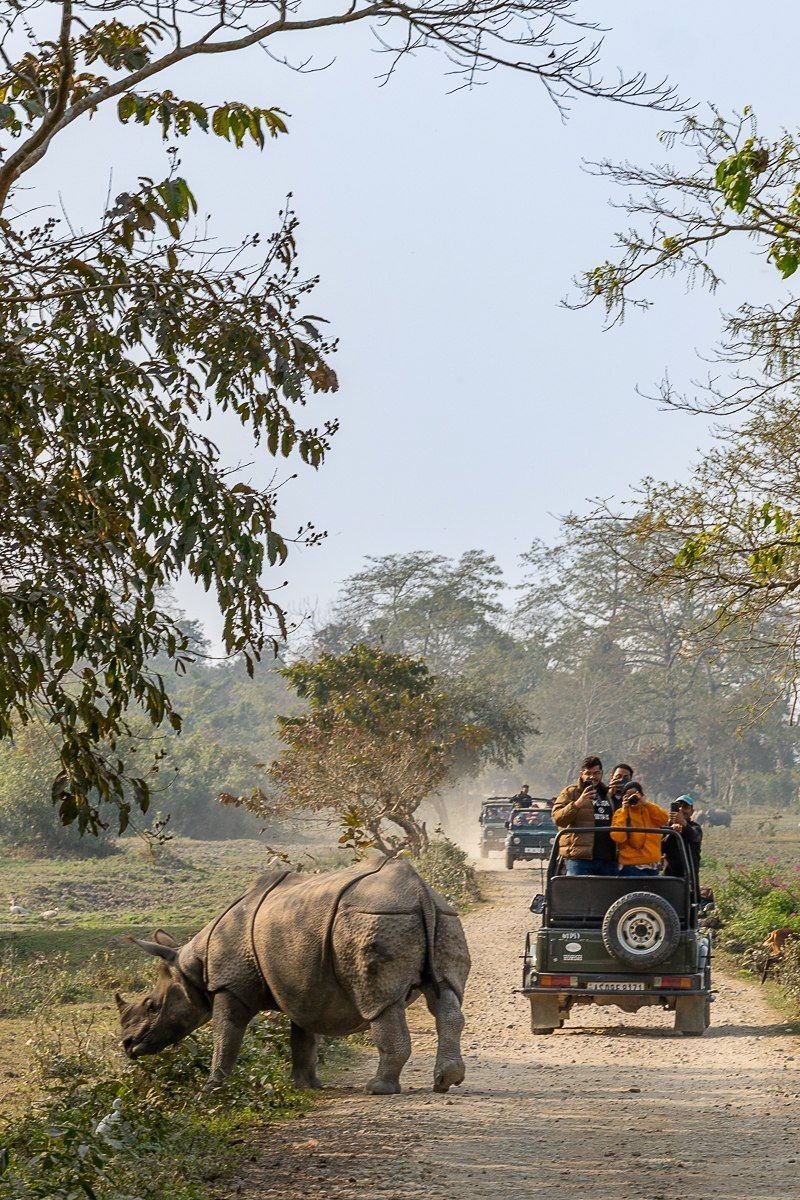
One-horned rhinoceros in their natural habitat at Kaziranga National Park
Home to the world's largest population of one-horned rhinoceros, Kaziranga National Park offers an unparalleled wildlife experience in the heart of Assam. This UNESCO World Heritage Site spans 430 square kilometers of pristine grasslands, wetlands, and forests, creating a photographer's paradise and nature lover's dream destination.
The Crown Jewel of Assam
Established in 1908, Kaziranga National Park has grown from a small reserve to become one of India's most successful conservation stories. The park is famous for housing two-thirds of the world's greater one-horned rhinoceros population, with over 2,400 rhinos calling this grassland home.
But Kaziranga is much more than just rhinos. The park hosts an incredible diversity of wildlife including tigers, elephants, wild water buffalo, swamp deer, and over 479 bird species. The Brahmaputra River forms the northern boundary of the park, creating a unique ecosystem that supports this remarkable biodiversity.
Best Safari Zones
Kaziranga is divided into five ranges, each offering unique wildlife viewing opportunities:
1. Kohora Range (Central Range)
The most popular and accessible range, perfect for first-time visitors. High chances of spotting rhinos, elephants, and various bird species. The famous watchtowers - Harmoti and Kathpara - offer panoramic views of the grasslands.
2. Bagori Range (Western Range)
Known for tiger sightings and excellent bird watching opportunities. The range has diverse habitats including grasslands, wetlands, and forests.
3. Agaratoli Range (Eastern Range)
Offers a more pristine and less crowded experience. Great for photography with beautiful landscapes and good wildlife sightings.
"The moment you see a one-horned rhino emerge from the tall grass, you understand why Kaziranga is considered one of the world's greatest wildlife sanctuaries."
- Senior Naturalist, Kaziranga National Park
Safari Options
Kaziranga offers multiple safari options to suit different preferences and budgets:
Jeep Safari
- Best for: Photography and close wildlife encounters
- Duration: 2-3 hours
- Capacity: 4-6 people per jeep
- Cost: ₹2,500-3,500 per jeep
Elephant Safari
- Best for: Traditional experience and getting close to rhinos
- Duration: 1 hour
- Capacity: 4 people per elephant
- Cost: ₹1,800 per person
Buffer Zone Safari
- Best for: Extended wildlife viewing
- Duration: 3-4 hours
- Special features: Access to areas outside core zones
Best Time to Visit
The park is open from November to April, with different months offering unique experiences:
- November to February: Cool weather, excellent visibility, peak season
- March to April: Warmer weather, animals frequent water sources, great for photography
- May to October: Park closed due to monsoons and flooding
Wildlife Photography Tips
Kaziranga offers incredible opportunities for wildlife photography. Here are expert tips:
Equipment Recommendations:
- Telephoto lens (300-600mm) for distant wildlife
- Fast shutter speeds to capture movement
- Extra batteries (cold weather drains them quickly)
- Dust protection for your gear
Best Photography Times:
- Early Morning (6:00-8:00 AM): Golden light, active wildlife
- Late Afternoon (3:00-5:00 PM): Warm light, animals coming to water
- Avoid midday: Harsh light and inactive animals
Accommodation Options
Stay options range from budget guesthouses to luxury eco-resorts:
Inside the Park:
- Forest Rest Houses: Basic but authentic experience
- Tourist Lodges: Comfortable mid-range option
Near the Park:
- Eco-resorts: Luxury with sustainability focus
- Heritage properties: Colonial-style accommodations
- Homestays: Cultural immersion with local families
Conservation Success Story
Kaziranga represents one of conservation's greatest success stories. The rhino population has grown from just 12 individuals in 1908 to over 2,400 today. This success is due to:
- Strict anti-poaching measures
- Community involvement in conservation
- Habitat restoration programs
- Research and monitoring initiatives
Beyond Wildlife
While wildlife is the main attraction, Kaziranga offers cultural experiences too:
- Tea Garden Visits: Explore nearby Assam tea estates
- Village Tours: Meet local communities and learn about their traditions
- River Cruises: Brahmaputra river boat trips
- Cultural Programs: Traditional Assamese music and dance
Planning Your Visit
Here's what you need to know for planning your Kaziranga safari:
Essential Information:
- Entry Fee: ₹200 per person (Indians), ₹1,500 (foreigners)
- Camera Fee: ₹500 for still camera, ₹5,000 for video
- Booking: Advance booking recommended, especially in peak season
- Guide: Mandatory guide provided with each safari
What to Bring:
- Warm clothing (early morning safaris can be cold)
- Sunhat and sunglasses
- Binoculars for bird watching
- Insect repellent
- Water bottle and snacks
Conclusion
A safari in Kaziranga National Park is more than just wildlife viewing – it's an encounter with one of nature's most remarkable success stories. Whether you're a wildlife photographer, nature enthusiast, or simply seeking an unforgettable adventure, Kaziranga offers experiences that will stay with you forever.
The sight of a massive one-horned rhino grazing peacefully in the golden grasslands, with the backdrop of the Himalayas in the distance, is a moment that captures the essence of what makes Northeast India such a special destination for wildlife lovers worldwide.