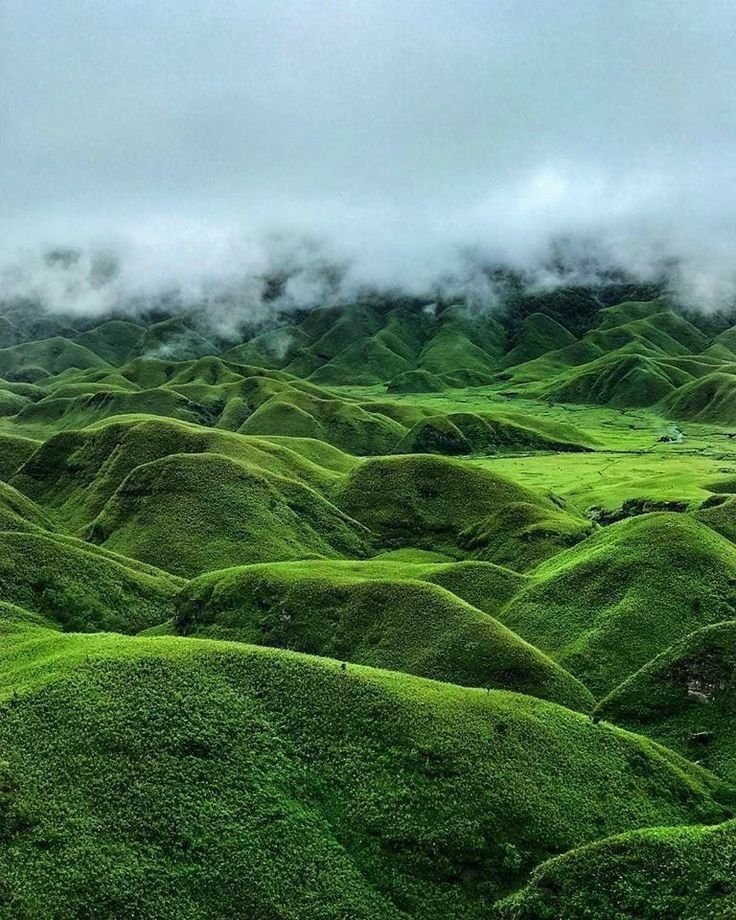
Dzukou Valley transforms into a carpet of lilies during the blooming season
Known as the 'Valley of Flowers of the Northeast', Dzukou Valley transforms into a spectacular carpet of lilies during the blooming season. Located on the border of Nagaland and Manipur, this pristine valley at an altitude of 2,438 meters offers one of the most beautiful trekking experiences in Northeast India, combining stunning landscapes with unique flora that exists nowhere else in the region.
The Enchanted Valley
Dzukou Valley derives its name from the Angami Naga word "Dzüko," which means "cold water" - a reference to the valley's naturally cold stream. This U-shaped valley stretches over several kilometers and is surrounded by towering hills that create a natural amphitheater of unparalleled beauty.
What makes Dzukou truly special is its unique ecosystem. The valley floor is covered with a thick carpet of grass that remains green throughout the year, dotted with seasonal wildflowers that create a kaleidoscope of colors. During the lily season (typically June to September), the entire valley transforms into what can only be described as nature's masterpiece.
The Famous Dzukou Lily
The Dzukou Lily (Lilium mackliniae) is an endemic species found only in this valley and a few surrounding areas. These white lilies with their distinctive trumpet shape and sweet fragrance bloom in profusion during the monsoon months, creating a spectacle that attracts botanists and nature lovers from around the world.
Named after Jean Macklin, the wife of a British political agent who first documented them in the 1940s, these lilies have become the symbol of Dzukou Valley. The sight of thousands of white lilies swaying in the mountain breeze against the backdrop of rolling green hills is an image that stays with visitors forever.
"Standing in Dzukou Valley during the lily season is like being inside a living painting. The white flowers stretch as far as the eye can see, creating a dreamscape that seems almost too beautiful to be real."
- Botanist, Wildlife Institute of India
Trekking Routes
There are two main routes to reach Dzukou Valley, each offering different experiences:
Route 1: Via Viswema Village, Nagaland
- Distance: 15 km trek from Viswema
- Duration: 4-5 hours one way
- Difficulty: Moderate to challenging
- Best for: Experienced trekkers seeking adventure
- Highlights: Traditional Naga villages, terraced fields
Route 2: Via Mao Gate, Manipur
- Distance: 8 km trek from Mao
- Duration: 2-3 hours one way
- Difficulty: Moderate
- Best for: First-time trekkers and families
- Highlights: Shorter route, beautiful viewpoints
Best Time to Visit
Dzukou Valley offers different experiences throughout the year:
June to September - Lily Season (Peak Time)
- Dzukou lilies in full bloom
- Lush green landscapes at their best
- Monsoon rains make trekking challenging but rewarding
- Maximum tourist footfall
October to November - Post-Monsoon
- Clear skies and excellent visibility
- Pleasant weather for trekking
- Grass begins to turn golden
- Ideal for photography
December to February - Winter
- Frost-covered landscapes
- Challenging weather conditions
- Unique winter beauty
- For experienced winter trekkers only
March to May - Pre-Monsoon
- Moderate weather conditions
- Good visibility for mountain views
- Rhododendrons in bloom on surrounding hills
- Fewer crowds
Trekking Preparation
Proper preparation is essential for a safe and enjoyable Dzukou Valley trek:
Physical Fitness
- Moderate to good fitness level required
- Practice hiking with a backpack before the trek
- Cardiovascular endurance important due to altitude
- Leg strength training recommended
Essential Gear
- Footwear: Sturdy trekking boots with good grip
- Clothing: Layered clothing system, waterproof jacket
- Camping: Lightweight tent, sleeping bag rated for low temperatures
- Navigation: Map, compass, GPS device
- Safety: First aid kit, emergency whistle
- Photography: Camera with extra batteries and memory cards
Food and Water
- Carry sufficient water (at least 3 liters per person)
- Water purification tablets or filter
- High-energy snacks and meals
- Cooking equipment if camping
Camping in Dzukou
Camping overnight in Dzukou Valley is an unforgettable experience:
Camping Guidelines
- Camping is allowed only in designated areas
- Carry all camping equipment including tents
- Follow Leave No Trace principles
- Obtain necessary permits from local authorities
What to Expect
- Spectacular sunset and sunrise views
- Clear night skies perfect for stargazing
- Temperature can drop significantly at night
- Natural silence broken only by wind and wildlife
Flora and Fauna
Dzukou Valley hosts a unique ecosystem with diverse plant and animal species:
Plant Life
- Dzukou Lily: The star attraction during blooming season
- Rhododendrons: Various species bloom on surrounding hills
- Bamboo: Different varieties found throughout the trek
- Grasses: Unique high-altitude grass species
- Medicinal plants: Traditional herbs used by local communities
Wildlife
- Various bird species including mountain eagles
- Small mammals like mountain goats
- Butterflies and insects during warmer months
- Rich biodiversity due to varied altitude zones
Cultural Significance
For the Naga people, Dzukou Valley holds deep cultural and spiritual significance:
- Considered sacred by local Angami and Mao Naga tribes
- Traditional hunting grounds with cultural protocols
- Source of medicinal plants used in traditional healing
- Featured in local folklore and songs
Conservation Efforts
Dzukou Valley faces environmental challenges due to increasing tourism:
Current Issues
- Littering and pollution from increased visitors
- Damage to fragile ecosystem from unregulated camping
- Pressure on endemic lily populations
- Soil erosion from poorly maintained trails
Conservation Initiatives
- Local community-led conservation programs
- Visitor education about responsible trekking
- Trail maintenance by volunteer groups
- Research on lily conservation methods
Photography Tips
Capturing the beauty of Dzukou Valley requires planning and technique:
Best Photography Conditions
- Golden Hour: Early morning light enhances the lily blooms
- Overcast days: Soft light perfect for flower photography
- After rain: Enhanced colors and dramatic clouds
- Clear evenings: Stunning sunset shots over the valley
Equipment Recommendations
- Wide-angle lens for landscape shots
- Macro lens for detailed flower photography
- Tripod for stability in windy conditions
- Polarizing filter to enhance sky contrast
- Extra batteries (cold weather drains them quickly)
Responsible Trekking
Help preserve Dzukou Valley for future generations:
- Pack out all trash: Leave no trace behind
- Stay on marked trails: Avoid damaging vegetation
- Don't pick flowers: Especially the endemic lilies
- Respect local customs: Follow community guidelines
- Use eco-friendly products: Biodegradable soaps and detergents
- Minimize campfire impact: Use existing fire rings
Conclusion
Dzukou Valley represents the pristine beauty that Northeast India is famous for. The trek to this "Valley of Flowers" is more than just a hiking adventure – it's a journey into one of the most beautiful and ecologically significant landscapes in the region.
Whether you visit during the spectacular lily season or explore its beauty in other months, Dzukou Valley offers an experience that connects you deeply with nature. The sight of endless white lilies dancing in the mountain breeze, the silence of the high-altitude grasslands, and the warmth of Naga hospitality combine to create memories that will last a lifetime.
As you plan your trek to this magnificent valley, remember that you're not just a visitor but a temporary guardian of this precious ecosystem. Trek responsibly, respect the local culture, and help ensure that future generations can also experience the magic of Dzukou Valley.